Enterprise Governance and Risk Management: Building Trust and Collaboration for Success

Introduction

In today’s complex business landscape, effective enterprise governance and risk management are crucial for organizations to thrive. The interplay between these two functions can determine the success or failure of a compliance culture within an organization. This article will delve into the key factors that influence the relationship between enterprise governance and risk management, highlighting the importance of trust and collaboration for achieving corporate performance and mitigating downside risk.

Incentives and Culture: The Foundation of Compliance

A strong compliance culture is built upon a foundation of aligned incentives, leadership styles, and transparency. These factors shape the overall compliance culture within an organization and determine its effectiveness. When enterprise governance and risk management work in harmony, they create a competitive advantage. However, inherent mistrust can arise due to conflicting incentives and goals.

To address this issue, leaders in enterprise governance and risk management must focus on building trust. By fostering an environment of trust, these leaders can leverage it to their advantage. Collaboration and engagement between enterprise governance and risk management can lead to positive outcomes such as increased corporate performance and team satisfaction. This trust also reduces downside risk, as employees are more willing to speak up and self-report errors.

“Developing unconditional trust will lead to a free exchange of knowledge and information, resulting in increased corporate performance and reduced downside risk.”

Collaboration: Bridging the Gap

Collaboration between enterprise governance and risk management is essential for several reasons. Firstly, risk management should not be seen as a mere bolt-on function of enterprise governance. It needs to move from a non-traditional leadership role with indirect reporting lines. Secondly, the rapidly changing business environment, including factors such as social media, technology, and AI, necessitates collaboration between these two functions. Additionally, as the corporate environment evolves, new leadership skills are needed, along with a focus on diversity, equity, inclusion, and changing cultural views of risk management.

Identifying and addressing toxic leaders or managers is crucial to counter the negative effects on trust, information flow, and knowledge sharing. By acknowledging and addressing these issues, organizations can make better-informed decisions, enhance productivity, and reduce downside risk.

“Collaboration between enterprise governance and risk management is essential to make informed decisions, enhance productivity, and reduce downside risk.”

Results: Unlocking Corporate Performance

Improving trust between enterprise governance and risk management can have a profound impact on corporate performance. When information and knowledge flow freely across the organization, it significantly reduces downside risk and enhances upside risk. This, in turn, contributes to a positive brand awareness and perception.

By integrating risk management as a collaborator for corporate success, rather than a perceived bolt-on function, organizations can leverage collaboration and adapt to the rapidly evolving business environment. Embracing the changing landscape and utilizing the collective expertise of enterprise governance and risk management can lead to improved corporate performance and increased competitive advantage.


Do You Practice Evidence-Based Management

In a previous post, I mentioned evidence-based management and I thought additional information would be helpful. Evidence-based management is best defined as gathering all the information possible to make an informed decision. We make decisions in our personal and work lives through a wide variety of lenses. For example, in our work lives, decisions are made based on our professional experience and training. Being trained in legal knowledge, decisions will be made through that lens of being a lawyer. Being trained as a salesperson, decisions will be made through the lens of wanting to make the next sale.

There is nothing wrong with these decision-making processes. However, they can create a conflict. The conflict could be that a risk manager who is trained as a lawyer might not agree with some of the actions and decisions a salesperson may be making.  The salesperson is under pressure to deliver sales results and can view the policies and procedures of the risk management department as a hindrance, or restrictive on their ability to make a sale. The risk manager may be uncomfortable with some of the actions a salesperson may take to close out a sale. Through using evidence-based management, this conflict can be greatly reduced and even used to develop a trusting relationship between sales and risk management.

Evidence-based management is a decision-making process based on the combination of critical thinking and the best available evidence. Critical thinking is based on the personal experience of each party involved as they look at the decision process independently of professional training. Best available evidence is the information, facts or data that support or deny assumptions or hypotheses. Using critical thinking and best available evidence results in a decision-making process that is more academic and less made of personal opinion. To be evidence-based, risk managers should be looking at the information being used to make the decisions and ask:

  • Is the information from a reliable source? Is it fact or fiction?
  • Is all the organizational information being used, or is there some information being omitted or held back?
  • Have stakeholders and external professionals been consulted? If not, why?
  • Has there been any scientific literature or empirical studies referred to? If not, why?

As risk managers, we need to be aware of the information being used to make decisions, both in the risk management department and other departments such as the sales department. By being aware and making decisions using our own professional training and others’, the conflict between risk managers and salespeople can be greatly reduced and help in the process of creating a trusting and collaborative corporate culture of compliance.   

I have a question for you. In your role as a risk manager, have you ever sat in a strategic planning session with the sales department?

Here’s a great place to get additional information:  https://cebma.org/faq/evidence-based-management/

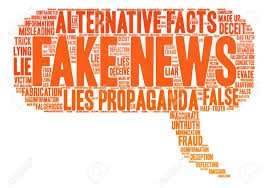
Sorting through fake news for real news!

I got caught the other day sharing a study on how the coronavirus spreads when you run, however it turns out the study is not a true scientific study, just conjecture. Fortunately I could correct the sharing of the fake news rather easily, however it highlighted in todays world, , how easy it is to get caught up in fake news. The speed and flood of information we receive on a daily basis seems to be overwhelming. We can’t turn the tap off however we can be better prepared.

We can be better prepared to sort through what we receive as being facts or half- truths or even false facts. The true facts allow us to make better decisions, worry less and focus on what’s truly important. I don’t what to be known as someone who spreads rumors or fake news, I want to be known as someone who cares about the truth. There’s a couple of quick steps at a high level we can take to arm ourselves so we’re more informed on fake news and don’t get caught out again.

1: Here’s an article I found that give a simple and effective 4 step process to identifying fake news. The four steps are:

From the Harvard Business review https://www.summer.harvard.edu/inside-summer/4-tips-spotting-fake-news-story

2: Understand the effect that fake news can have so that we are not the ones spreading the news. What we think is real is fake events or news that has a negative impact on the businesses we need to rely.

http://www.rmmagazine.com/2020/04/01/fake-facts-what-the-rise-of-disinformation-campaigns-means-for-businesses/

.

3: There are organizations that are promoting the concept of evidence-based management for business leaders. The approach they are advocating is using an academic based approach to the decision making which includes gathering all the best available evidence, not just the supporting evidence for a decision.

What Is Evidence-Based Management?

With the speed that events have been unfolding, the volume of information available and the little time we have to asses, digest and act, it’s important that we can at least at a high level, sort our fact from fiction. Hopefully with a little guidance we can make it easier on or selves in the assessment process.What tips or tricks to you have to help you sort out fact from fake news?

Get started on how you can begin working towards identifying the facts for leadership issues or road blocks by having a conversation. This conversation can begin the process to providing effective risk management leadership solutions.

[mc4wp_form id=”335″]

Culture of Compliance

“Culture of Compliance,” is this statement one or two concepts for risk managers.

I should have put this posting up sooner so that it would add some context to some of my comments

that I have posted and will be posting. When I read risk management oversight charters or the more

usually used ‘culture of compliance,’ I view these as two distinct concepts. The first concept being the

culture or people working for an organization. The second concept is being compliant to the systems,

policies and procedures that are in place. Compliance in my view is simply being compliant to the

process, and is separate from the culture, which is the people aspect of risk management.

By separating the culture of compliance into people and process, then the people aspect can be viewed

as how the people are being led, as in the corporate culture to be compliant which is separate from the

risk management process in place. All the leadership best practices and theories can then be brought in

to help with the people culture of the organization. Leadership theories like the tone for compliance is

set from the top of any organization.

I’ve experienced this separation first-hand recently, which has highlighted why risk managers need to

separate and focus on the people culture, separate from the policies and procedures. My experience in

the same location under the same risk management system, leadership has been divergent on the

cultural aspect. The divergence has been ranging from fully embracing and displaying a true culture to

risk management to the other end of the spectrum with a do what-ever, not really caring attitude. The

nonchalant attitude end of the spectrum would not instill a culture to be compliant.

Hopefully my stating that I believe separating the culture of compliance into people and process helps

with the postings that I’ve made and will be making. What are your thoughts or comments, please let

me know.

Social Capital

Separating the culture of compliance into people and process

If you were given two options, a 2% or 8% improvement in your risk management processes, which would you choose? As with everyone else in any organization, risk managers are expected to deliver more and get more from their current resources. We’re expected to deliver more and better results from what we are using. If given the choice, I would assume that the 8% would be the first choice, yet we seem to settle for the 2%.

The reason for settling for the 2% is because of the perceived tools in our toolbox that are available to get any improvements.  The 2% improvement comes mainly from software changes, and current process evolutions. The 8% comes from tools that are readily available in our toolbox, but we do not see them or recognize them as something we can use. One tool is the ability for risk managers to develop and use social capital as part our day to day activities. By separating the culture of compliance into people and process social capital is the development of goodwill by individuals in their interactions in any corporate setting.  By developing and building social capital, there is a more trusting and engaging relationship with those who you interact with.

Why is this concept important for risk managers? Because it begins to bring the culture of the organization into the risk management process. It may seem like it requires a major change and a potential costly re-organization, but it does not. All that’s needed is a subtle shift, an incremental shift in the right spot to begin moving towards incorporating people and their culture into the risk management systems.

Culture is a significant contributor to improving a risk management system and building trust. To get 8%, the focus needs to be in individual training and coaching however it needs to be done in a trusting environment and social capital goes along way to building that trust. Moving towards the use of social capital moves improvement in the risk management process from 2% closer towards 8%

It should be noted that both options can be used together it’s not one or the other. In fact, both are needed to be used together, social capital improvement can drive process improvements. Using process improvements with social capital will get you more than the 2% process improvement and closer to meeting or exceeding the 8% improvement.

Social Capital is a tool that should not be overlooked by risk managers. Are you using social capital as a tool to help promote the culture of being compliant?

Your thoughts and comments are welcomed.