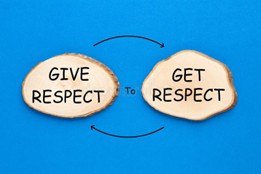
The month of December was a good month, not because it was the Christmas season, but because there was several moments of self reflection on Christmas’s past and how the seasons have evolved personally over the years. Yet this reflection was also about the year 2025 and the highs and the lows personally and professionally. Which leads me into this posting. One of the more important takeaways and standouts was the incredible respect that a few people showed that set them apart from others. Beneficial success in my mind is dependent upon respect; I will gladly work with those who show respect and will be guarded otherwise.
Which brings me to this. In a previous post, I wrote about setting yourself up for success and the benefits that come from having a clearly defined destination. One aspect of success that deserves far more attention, however, is respect — both how we give it and how we receive it.
In my experience, success is rarely achieved in environments where respect is lacking. In fact, sustained success depends on it.
Over the course of my career in financial services — working in operations, compliance, and risk management at both mid-management and executive levels — I’ve seen a recurring dynamic play out across multiple firms. One example, in particular, has stayed with me because it puts the role of respect front and centre. There are other examples that I could use as examples, yet I think this is the best example I can use.
For a firm to reach its full potential, advisors need corporate entities, and corporate entities need advisors. The relationship is symbiotic. Yet, too often, I’ve heard both sides assert — sometimes quite boastfully — “You wouldn’t exist without me. You need to do what I want.”
This wasn’t isolated to a single organization. It became a common theme throughout my career.
The reality is far simpler and far more constructive: both sides need each other. When either side loses sight of that, respect erodes, collaboration breaks down, and success becomes harder — not easier — to achieve.
When organizations genuinely respect each other’s roles, constraints, and objectives, something powerful happens. Communication improves. Risk is better managed. Decisions are more balanced. And ultimately, outcomes improve for advisors, corporate teams, and clients alike.
So how do we work toward respect — and use it as a foundation for success?
Here are a few practical ideas:
- Acknowledge interdependence
Success is shared. Recognizing that no single group succeeds in isolation sets the tone for collaboration. - Understand roles and pressures
Advisors face client demands and market pressures; corporate teams manage regulatory, operational, and risk realities. Respect starts with understanding these constraints. - Communicate with intent, not authority
Influence is far more effective than enforcement. Conversations grounded in purpose build trust. - Assume positive intent
Most people are trying to do the right thing within their role. Starting from that assumption changes the dynamic. - Align on outcomes, not egos
When the focus is on client outcomes and firm sustainability, respect becomes a natural byproduct.
Respect may not appear on a balance sheet or in a regulatory filing, but its absence is always felt — and its presence is often the difference between short-term wins and long-term success.
Success isn’t just about strategy, structure, or oversight. It’s about how we work together — and respect is at the heart of that.
Why Post
The idea behind postings on this platform is to as questions. Also, hopefully provide ideas, concepts or thoughts that highlight the challenges facing risk and compliance managers in the corporate governance structure. These postings are based on my personal experience, the experiences of others, and developing my understanding of the many leadership challenges, through publications and literature.
It’s my desire to help close the perceived negative gaps between corporate governance and risk/compliance management. There are ways and means to enhance the relationship, which I’ve focused on for several years. Direct message me for additional information on how to create a collaborative governance environment.